


Setting Sights High, Defying Limits
Joelle Wong (BA)
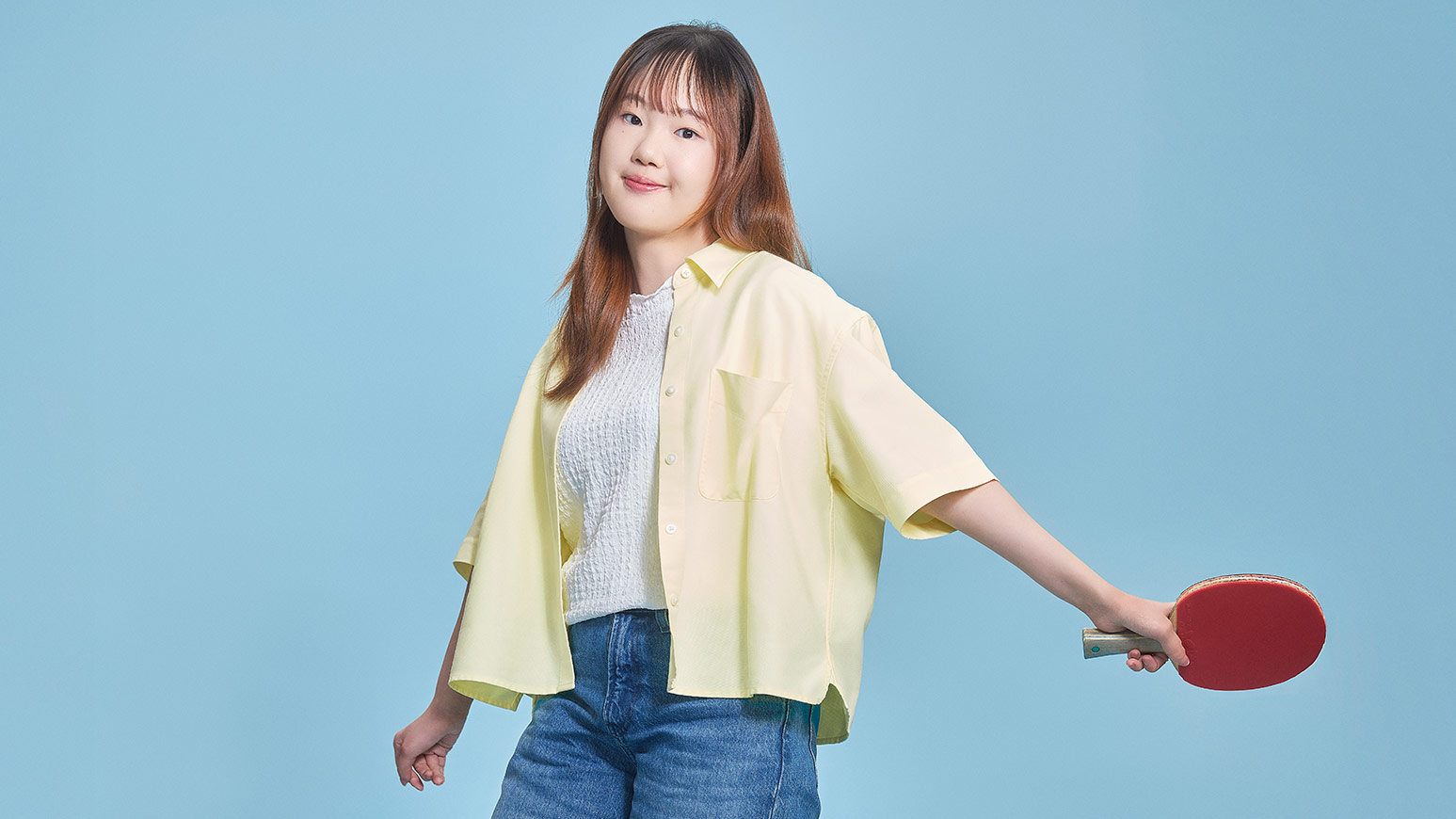
“I remind myself that while I was born with a disability, I was blessed with the ability to play table tennis.” This is what HKUer Joelle Wong Yue Ching says to herself whenever her Ehlers-Danlos syndrome (EDS) causes her a lot of pain, or she wants to give up.
This kind of mental resilience and the affinity for table tennis she feels she was blessed with have seen Joelle through tough times, and even brought her opportunities like admission through the Top Athletes Direct Admission Scheme (TADAS) to HKU, where she is now a Year 4 student in the Bachelor of Arts, majoring in Chinese Language and Literature.
Joelle was born with EDS, a group of rare inherited conditions that affect connective tissue and that can result in unstable joints and chronic pain or fatigue. She was 12 when table tennis first came into her life, as the school she was at had connections with the Sports Association for the Physically Disabled of Hong Kong, China.
“I’d always been naturally active, but never participated in sports before. So I tried table tennis, as it was within my ability,” she recalls. She was instantly hooked, and one can hear her enthusiasm still as she explains: “Table tennis is incredibly versatile, different spins can be created on a small table, and different types of rubber can also produce variations on the play.”
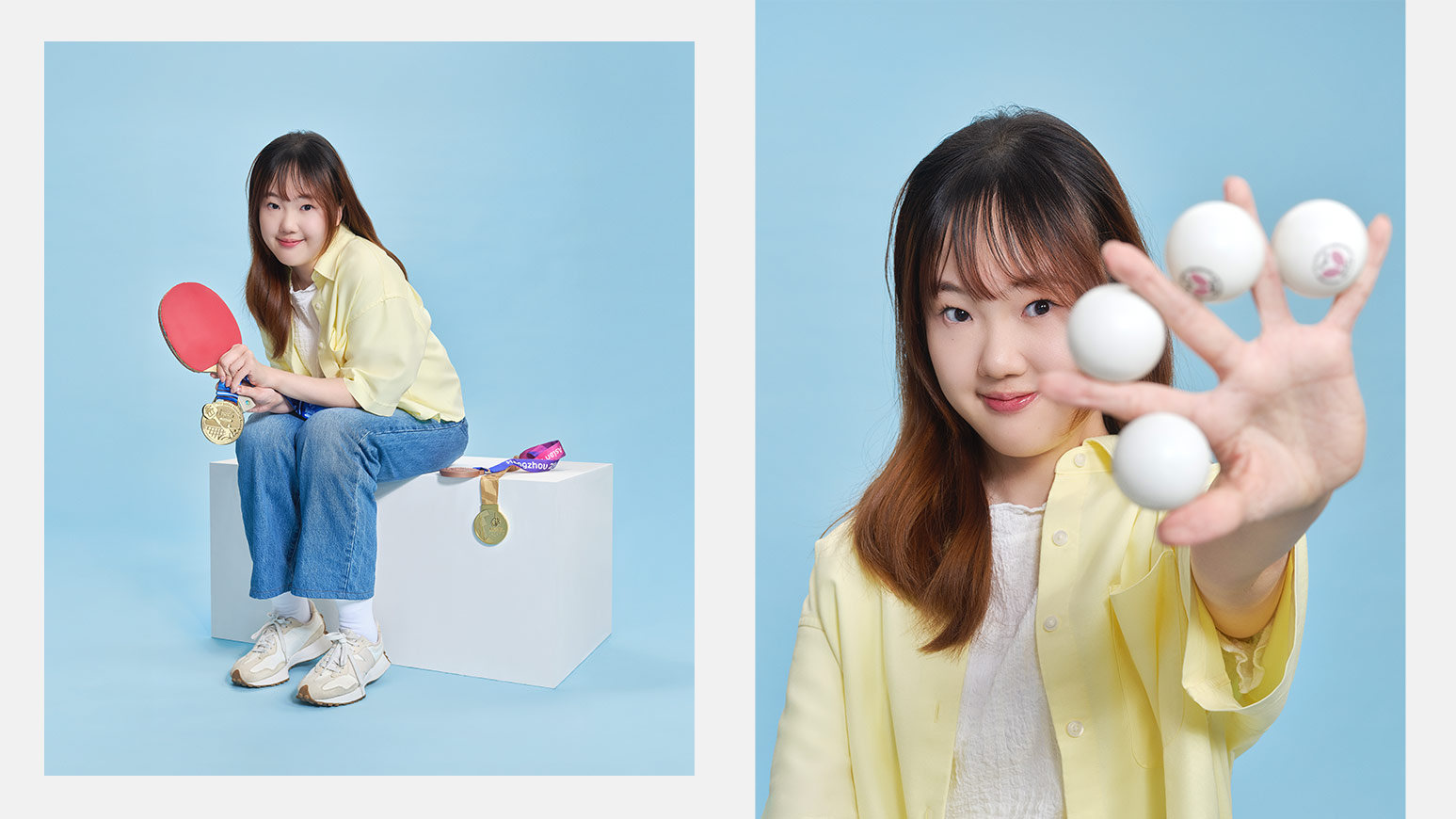
Given the limitations of her physical abilities, she is grateful to have found a sport that she can excel at. “I also reflect on why I persevered in the first place, and I think of my family and friends who have always supported and helped me,” she says.
Still, as an athlete, there are some things that she must face alone. “Although I received help from many coaches, teammates, and staff, ultimately, only I am on the court,” she explains. “The key to winning a competition lies in whether you can overcome the psychological pressure and perform to the best of your abilities. If you get stage fright, you’ve already lost half the battle.”
The journey hasn’t been easy, and given her EDS condition, she’s had to work hard, perhaps harder than most, to get ahead. “But which athlete doesn’t work hard?” she counters. “I’m not going to give up because of hardship. It’s not about winning medals, but each time I overcome an opponent I’ve never beaten before or who is ranked higher than me, I feel that all the effort and hard work have been worthwhile. It’s an affirmation of my effort and dedication.”
Unexpectedly, she claims that missing out on qualifying for the 2024 Paris Paralympic Games was a defining moment in her life. “It was a huge blow, but also a turning point in my table tennis career,” she says. “Previously, sport wasn’t my primary focus, nor was it my only priority. The Olympics often felt distant and irrelevant to me; I simply trained hard every day without any great ambitions.”
A twist of fate brought her tantalisingly close to qualifying … but then she missed out. “That experience solidified my resolve to dedicate myself fully to sports in the upcoming Olympic cycle,” she explains. “To achieve a dream, you must first have the courage to dream big, and continue pursuing your dream.”
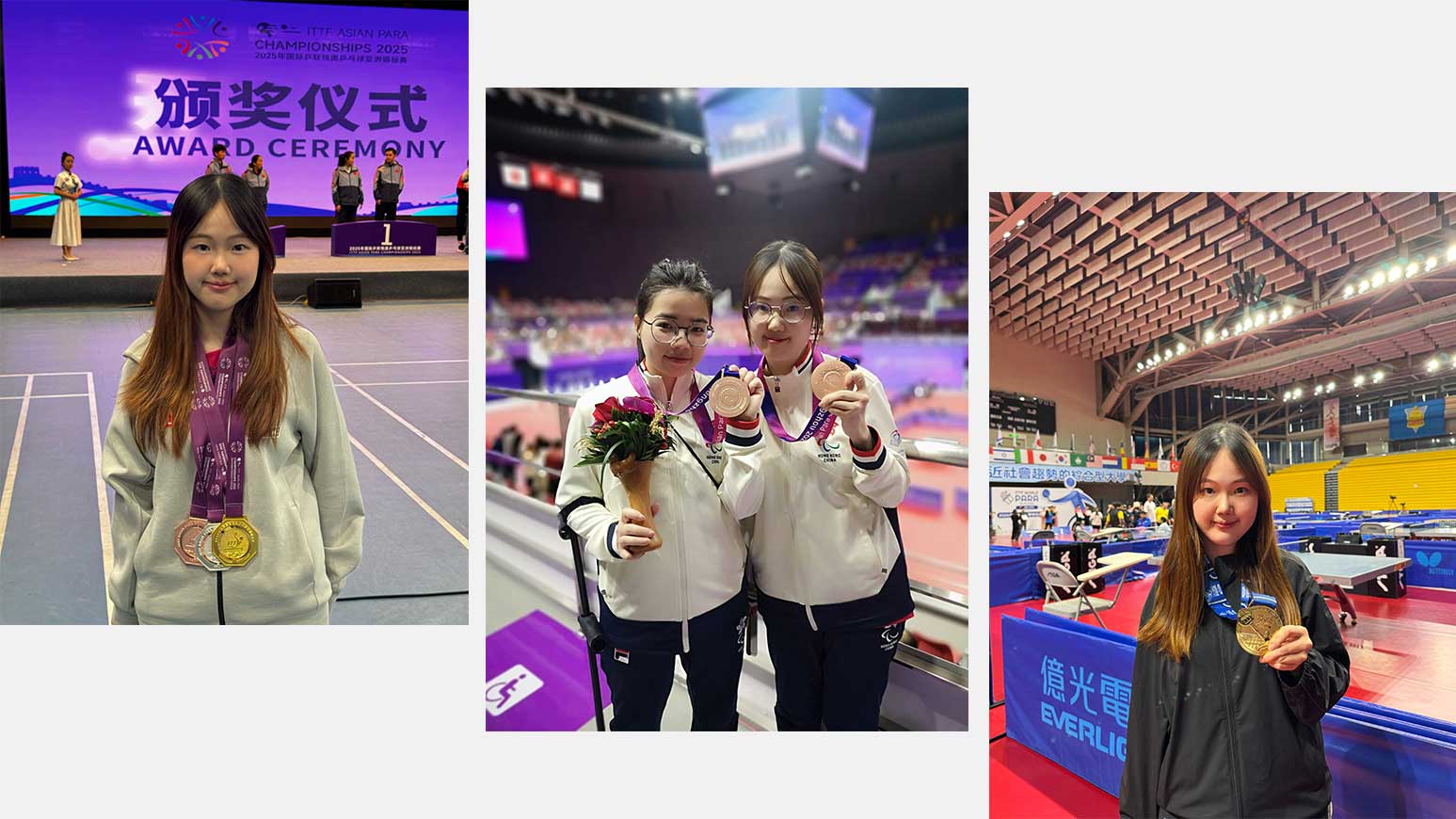
About her EDS, she says: “I wouldn’t say I’ve overcome my illness, because it’s ongoing and its future is uncertain.” But she’s experienced enough to clearly understand her strengths and weaknesses in the sport, and is working on improving the former to compensate for the latter.
“For example, compared to other players, my upper body strength is limited, but my lower body movement is slightly advantageous, so I focus on training my hand strength and maximising my lower body movement,” she says. “Even though I have won some medals or had a bit of success, I know for now my table tennis dream is just beginning. There is a long way to go, and I will continue to pursue my Olympic dream.”
Joelle was drawn to HKU because she noticed that it provides many resources for student athletes, supporting them as they strive to achieve their sporting ambitions while helping them grow academically. “The Faculty of Arts offers flexible course selections and combinations, especially since I’m taking Chinese Language and Literature as my major. This has made it easier to align my studies with my training schedule,” she says.
To balance the academic and the athletic sides of her life, she believes it’s important to have self-discipline and be truly committed to your sport. “This is what motivates you to persevere through challenging times. It’s hard to avoid sacrificing some rest and relaxation time with friends,” she observes. “However, professors are usually very kind, allowing student-athletes some leeway in our deadlines to maintain both the quality of our studies and training.”
Beyond her sport and studies, HKU’s university life has also broadened her horizons. “I also took Korean language courses and met like-minded friends, seeing each other almost every day, which was very enjoyable. The orientation camp also left a deep impression, I have very happy memories of that,” she recalls with a smile. “If my training schedule allows, I also hope to participate in different clubs or societies, maybe experience hall life, meet new people, and spend time with friends that will become memories I will always cherish.”
Looking forward, she says: “After graduation, I hope to focus on achieving my goals in sports. If I ever retire, I hope to return as a teacher, especially for children with special needs like me. Besides teaching them academically, I hope to use my story to show them that even though they may have been born with disabilities, they can strive to find their own stage on which to shine.”
Share


