


How An HKU Fencer is Redefining Success On and Off the Piste
Elize Wong (BSc(SLP))

When Elize Wong Shun Yat first picked up a fencing sword at age eleven, her immediate thought wasn’t about winning international medals or mastering precise footwork. It was about weight, and subsequently, a rare, childhood exemption.
“I wondered how people could move it with such quick movements during an entire match, because to me, it was really heavy,” Elize recalls. “At the same time, I felt like it was finally one time I could hit people without getting scolded by my mom. In fencing, I could do it legitimately!” she says, laughing.
That playful spark soon grew into a deep-seated passion. Facing older, faster classmates, she quickly realised that fencing was less about raw speed and more about strategy—a high-stakes game of physical chess where every athlete brings a unique style to the piste.
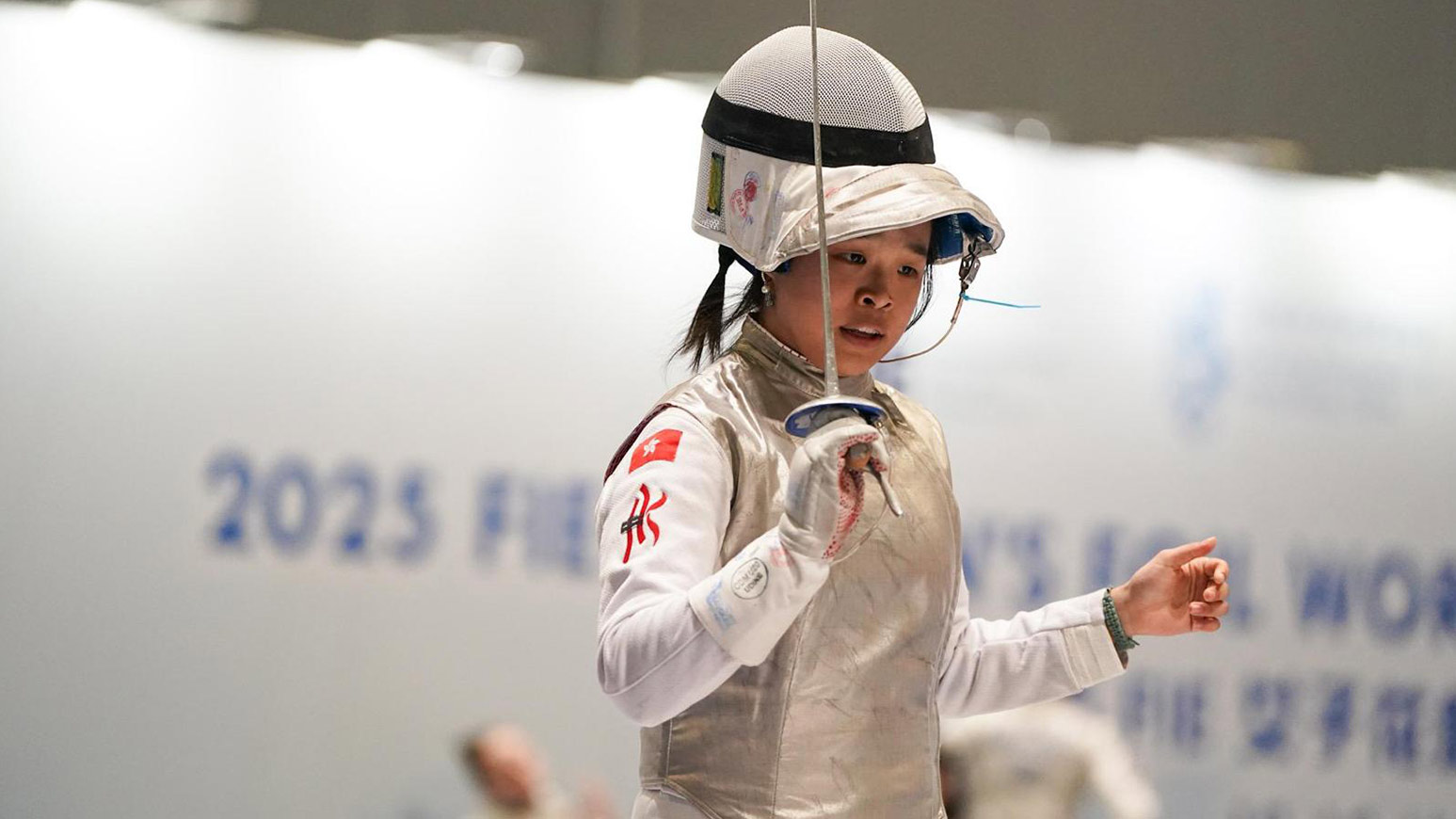
Today, Elize is a Year 2 Speech-Language Pathology (SLP) student in the Faculty of Education at HKU, admitted through the Top Athletes Admission Scheme (TADAS). But behind her dual life as a healthcare-student-in-training and elite athlete lies a journey defined by sudden triumph, sudden struggles, and the quiet resilience it takes to rebuild.
When she was sixteen, Elize experienced a breakthrough season that most athletes only dream of. She captured a silver medal at the Junior and Cadet Asian Fencing Championships and followed it up with a bronze at the Junior and Cadet Fencing World Championships. It was her first time representing Hong Kong, China in overseas competitions.

“When the results were way higher than my expectations, I was really shocked,” she says. “I chose to enjoy the feelings of excitement, and it motivated my training.” Returning home, rather than letting the pressure consume her before local ranking events, she celebrated the moment with her family, enjoyed good food, and embraced the joy of the milestone moment. “I didn’t know when the next time I could stand on an international podium would be, so I enjoyed the joy those medals brought me.”
However, the transition from the cadet level to the junior circuit proved to be a reality check. The field grew older, tactics became sharper, and Elize’s relatively late start in the sport left her foundation exposed.
“My fencing style used to be very lively – I liked to jump a lot, hated to parry, and only wanted to attack,” she explains. Soon, narrow losses, particularly by excruciating 15-14 margins, began to stack up. Heart-to-heart talks with her coaches revealed a hard truth: to compete at the next level, she had to dismantle her style and build a stronger foundation in footwork and defensive parries.
Rebuilding, however, takes time, and patience proved to be her biggest challenge.
“The hardest part in this transition was trusting the process,” she says. “I could feel myself improving so much technically, but during competitions, the results weren’t matching my expectations.”
It took three years of relentless effort to bridge the gap. Today, she fences with a newfound stability, patience, and confidence in her defensive game.
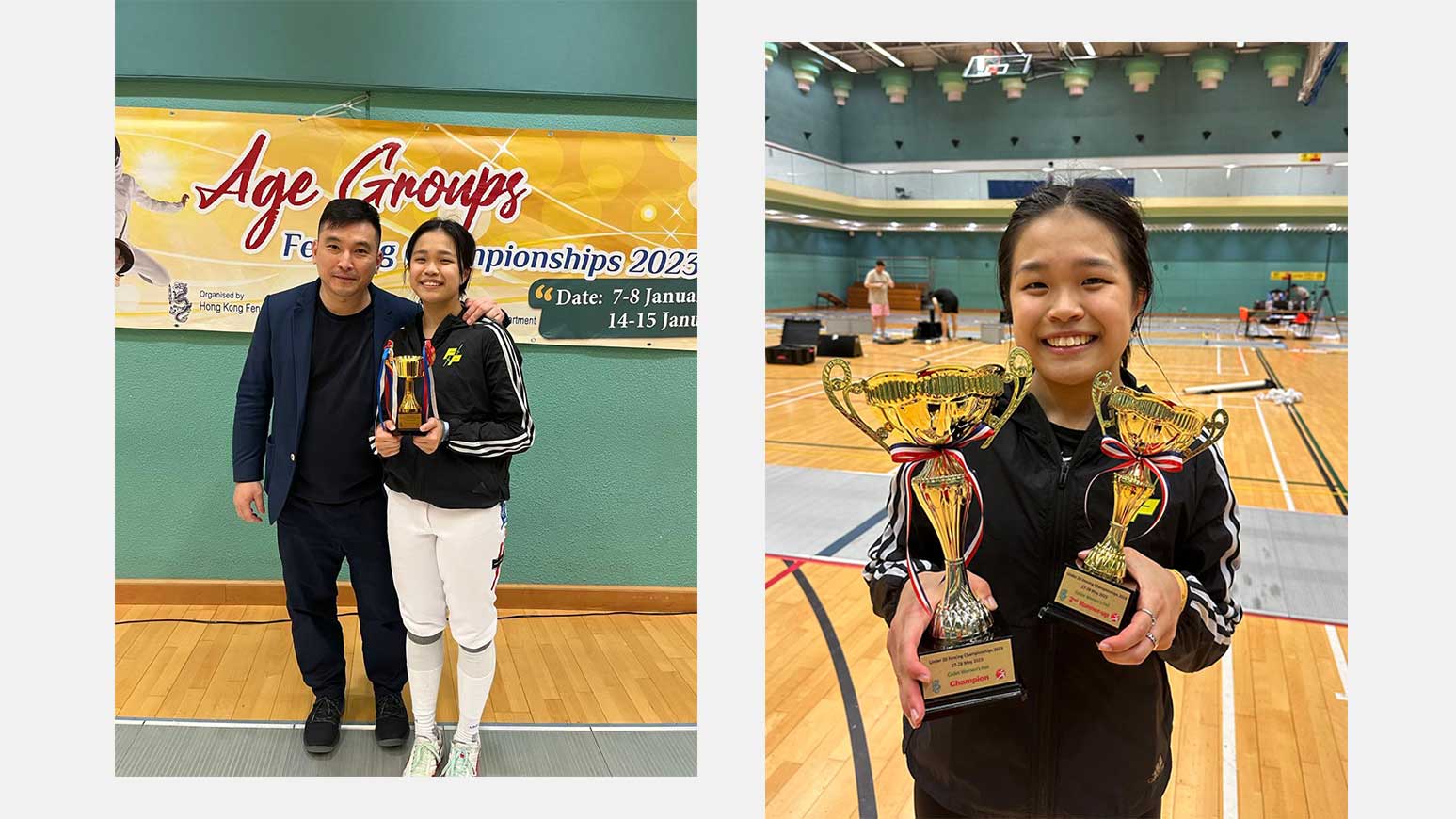
“If I hadn’t lost so many competitions over these years, I wouldn’t have realised what I needed to improve,” she says candidly. “These failures reminded me why I continue this sport. It isn’t for the glory or the medals. It’s because of my love for the sport. I am constantly gearing myself up to stand on the podium again, but if I lose the next competition, it’s okay. I’ll learn from my mistakes and get ready for the next time.”
Elize’s dedication to helping others extends far beyond her athletic endeavours. Her choice to pursue a Bachelor of Science in Speech-Language Pathology at HKU stems from a deeply personal childhood experience.
As a young girl, Elize struggled to express her feelings and found communication difficult. Her parents brought her to a speech therapist whose patience and step-by-step guidance changed her life.
“If my parents hadn’t brought me to see the SLP when I was a child, I wouldn’t be able to communicate well with my teammates, and I definitely wouldn’t have been able to make so many friends from different nations,” she observes.
Now, she wants to pay that gift forward. Elize notes that while fencing has skyrocketed in popularity across Hong Kong, general awareness around speech and swallowing issues remains low. She recalls how her own father frequently choked while eating, a potential symptom of a swallowing disorder that he initially brushed off. She discovered that kind of dismissiveness was surprisingly common among her peers’ families too. As a firsthand witness of swallowing disorders and a future healthcare professional, she hopes to destigmatise these conditions and encourage early intervention.
Her clinical aspirations are also personal. On weekends, Elize often returns to her local fencing club in Lai Chi Kok to coach young girls. Spending time with them made her realise her natural affinity for working with youth, guiding her goal to specialise in paediatrics.
Juggling an elite athletic schedule with demanding university coursework is no simple feat. Overseas competition trips and intensive training camps frequently clash with exam periods and assignment deadlines.
To help her succeed, HKU provides tailored academic support. Professors grant flexible deadlines and allow her to sit for exams after returning from travel, while the University provides ‘learning buddies’ to hold tutorial sessions to help her catch up on missed lectures.
Equally important to Elize, however, was experiencing authentic university life. During her freshman year, she fully immersed herself in campus culture, participating in her Faculty’s Orientation Camp and her programme’s Orientation Day.
“Making a lot of new friends and meeting classmates made me feel safer before starting the semester,” she says. “It made me feel like, ‘Wow, I am a university student.’ These are valuable experiences I’ll always remember.”

Looking ahead, Elize’s competitive drive remains undiminished. Her ultimate athletic goal is to capture world-level medals, but her internal focus has shifted toward growth, consistency, and joy. She wants to keep exploring the world, forming international friendships, and learning to compete happily under pressure.
When asked what message she hopes her journey sends to the next generation of dreamers, her advice is direct, warm, and grounded in experience. “Everything is possible,” she says. “Trust the process and enjoy the show!”
Share


